 Skip to content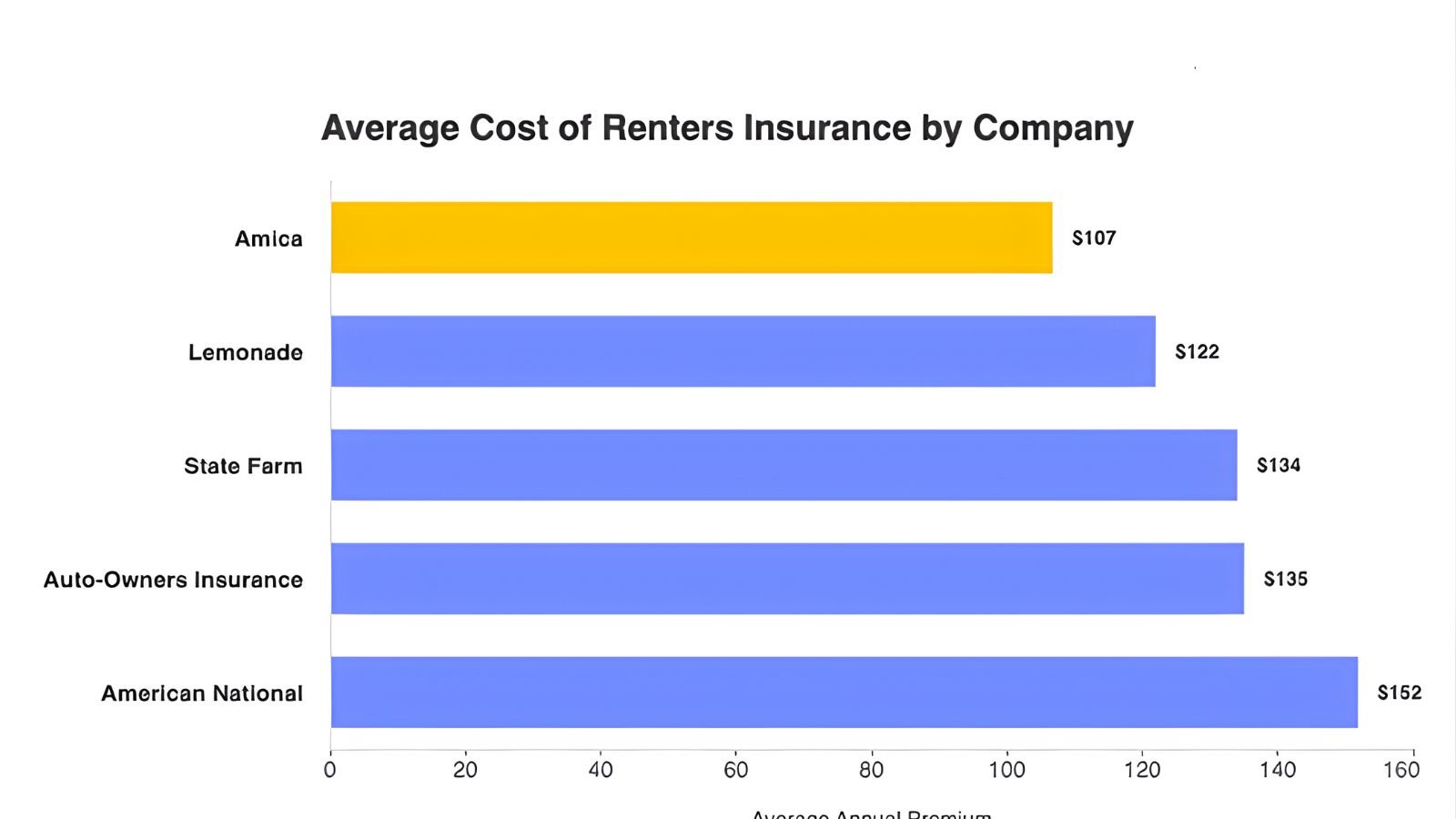
Renters insurance remains one of the most affordable types of coverage in the United States. According to recent data from the National Association of Insurance Commissioners (NAIC) and major insurers like State Farm and Allstate, the average annual premium for renters insurance ranges between $140 and $220 per year — or roughly $12 to $20 per month.
However, your actual cost can vary significantly depending on where you live and how much coverage you choose.
What Does Renters Insurance Actually Cover?
Before comparing prices, it’s important to understand what you’re paying for. A standard renters insurance policy typically includes three core protections:
Personal Property Coverage
Protects your belongings such as:
- Furniture
- Clothing
- Electronics
- Jewelry
Coverage applies to “named perils” like fire, theft, vandalism, smoke damage, and certain types of water damage.
Most policies cover personal property even if it’s stolen outside your home (for example, from your car or while traveling).
Liability Protection
If someone is injured in your apartment — or if you accidentally damage someone else’s property — liability coverage helps pay for:
- Legal defense costs
- Medical bills
- Court judgments
Most standard policies include $100,000 in liability coverage, though higher limits are available.
Loss of Use (Additional Living Expenses)
If your rental becomes uninhabitable due to a covered disaster, this coverage pays for:
- Hotel stays
- Restaurant meals
- Temporary housing
- Extra transportation costs
This benefit can be a financial lifesaver after fires or severe storm damage.
Factors That Influence Your Renters Insurance Premium
Why might someone in Idaho pay $10 per month while someone in Miami pays $35? Several key factors determine your rate.
Location (State & ZIP Code)
Your geographic area plays a major role in pricing.
- Hurricane-prone states like Florida often have higher premiums.
- Wildfire-heavy states like California also see elevated rates.
- Areas with higher crime rates typically cost more to insure.
Even moving a few ZIP codes away can impact your monthly premium.
Amount of Coverage
The more coverage you purchase, the more you pay.
Many renters underestimate the value of their belongings. Consider:
- Laptop ($1,200+)
- Smartphone ($800+)
- Gaming console ($500+)
- Mattress & furniture ($3,000+)
- Clothing & shoes ($2,000+)
It adds up quickly. A typical renter may need $20,000–$40,000 in personal property coverage.
Your Deductible
Your deductible is the amount you pay out-of-pocket before insurance coverage kicks in.
- $250 Deductible → Higher monthly premium
- $1,000 Deductible → Lower monthly premium
Choosing a higher deductible can reduce your annual cost, but make sure it’s an amount you could comfortably afford in an emergency.
Actual Cash Value (ACV) vs. Replacement Cost Value (RCV)
This is one of the most important decisions when buying a policy.
Actual Cash Value (ACV)
- Pays the depreciated value of your items
- Cheaper premium
- Lower claim payout
Replacement Cost Value (RCV)
- Pays what it costs to buy brand-new replacements
- Slightly higher premium
- Much better financial protection
For most renters, RCV is strongly recommended.
Renters Insurance Cost by State (General Comparison)
While rates fluctuate yearly, here’s a broad comparison:
Cheapest States (Often Under $12/Month)
- New Hampshire
- Utah
- Iowa
Most Expensive States (Often Over $25/Month)
- Mississippi
- Louisiana
- Texas
The difference is largely due to weather risks and regional claim frequency.
How to Save Money on Renters Insurance
You don’t have to pay the first quote you receive. Here are proven ways to lower your premium:
Bundle Your Policies
If you already have auto insurance with companies like:
- GEICO
- Progressive
- State Farm
You could save up to 25% by bundling renters insurance with your car insurance.
Install Safety Devices
Insurance companies reward lower risk. Discounts may apply for:
- Smoke detectors
- Deadbolt locks
- Fire extinguishers
- Security systems
Maintain a Strong Credit Score
In most states, insurers use credit-based insurance scores when calculating premiums. A higher score often means lower rates.
Pay Annually Instead of Monthly
Many insurers offer small discounts if you pay the full annual premium upfront instead of monthly installments.
Frequently Asked Questions (FAQs)
Is renters insurance required by law?
No, it is not legally required by federal or state governments. However, many landlords require it as part of the lease agreement.
Does renters insurance cover roommates?
Usually not. Each roommate typically needs their own policy unless specifically listed on the same policy.
Does renters insurance cover floods or earthquakes?
Standard policies do not cover flood or earthquake damage. You would need:
A flood insurance policy (often through FEMA programs)
An earthquake endorsement or separate policy
Final Verdict: Is Renters Insurance Worth It?
Absolutely.
For roughly the cost of two coffee shop drinks per month, you can protect:
- $30,000+ in personal property
- $100,000 or more in liability coverage
- Emergency housing expenses after disasters
Considering the financial risk of theft, fire, or liability lawsuits, renters insurance offers one of the best value-to-protection ratios in personal finance.